


🔍 Beginning: Why do potato chips always ”fall apart” on the conveyor line?
Your chips are golden and crispy, only to crumble as soon as they hit the conveyor belt? Or stick to the mesh belt can not even pick off? Don't worry, this is not your family's problem - the industry statistics potato chips conveyor breakage rate is generally in the15%-20%The fact is that one out of every five packets of potato chips is a ”handicapped product”! Let's talk about how to use them today!Mesh Belt Materialcap (a poem)Wind speed controlThese two moves pull the complete rate to over 95%!
🛠️ I. Mesh Belt Selection: The First Line of Defense Against Sticking and Shattering
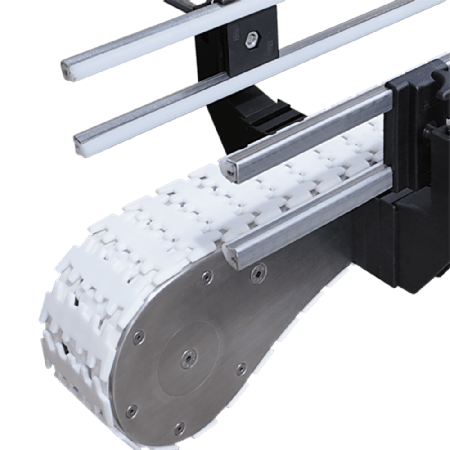
The nightmare of potato chips conveying is ”sticky and crunchy”, choosing the wrong mesh belt is equivalent to letting potato chips dance with crumbs. Let's look at the actual performance of the three mainstream materials:
| Material Type | Anti-tacky⭐ | Shatter resistance🚀 | Applicable Scenarios |
|---|---|---|---|
| 316L Stainless Steel Mesh Belt | Medium (coefficient of friction 0.35) | Worse (hard hitting) | Pre-treatment cleaning section |
| PTFE coated tape | ultra-strong(Friction coefficient 0.08) | moderate | High oil section after frying |
| Food grade silicone tape | Stronger (coefficient of friction 0.15) | talented(elastic cushioning) | Flavored cooling section |
ask and answer questions for oneselfWhy do chips stick to the tape when they come out of the pan?
After high-temperature frying, the surface grease of potato chips is like glue, and when it touches ordinary metal mesh belt (surface energy of 72mN/m), it will directly ”kill with face”. The surface energy of PTFE coated belt is only18mN/mThe grease can't be hung up at all! After a factory changed PTFE belt, cleaning frequency from 2 times per shift down to 2 days 1 time, saving water and electricity also save labor.
🌬️ II. Wind Speed Control: ”Invisible Crash Airbags” for Potato Chips”
Don't underestimate the role of airflow! The right wind speed can support the chips to go, the wrong adjustment directly into a ”chip tornado”. The key is to remember the three numbers:
- Anti-sticking gold wind speed: 1.5-2m/s
- With the chips out of the fryer, useupwindFormation of air cushion layer, measured reduction of adhesion rate 40%
- Shatterproof Safe Flow Rate: ≤8m/s
- For every 1m/s increase in speed in pneumatic conveying, the crushing rate soars by 15%! Dense-phase conveying (3-8m/s) is much gentler than dilute-phase conveying (18-30m/s).
- The Angle Mystery::
- air ventTilt 30°-45°It's a great way to blow away the chips without flipping them over.
ask and answer questions for oneself: Won't the low-speed conveyor clog the line?
That's design ingenuity! Add in the turnaroundB-type deflectorfit0.2MPa micro-pressure windThe chips turn naturally like a slide, and the speed drops to 5m/s as usual - the fragmentation rate of a production line has dropped drastically from 22% to 3.2% after the modification.
🔧 III. Tensioning and Layout: Keeping the Webbing ”in Line”
Loose webbing = chip bouncing scene! Three practical points:
- Precise control of tensioning force::
- expense or outlayScrew Regulator(Accuracy ±0.5mm), 3 times more stable than spring-loaded type.
- Mnemonic: finger pressure mesh belt sinking ≤ 3mm for the best
- Rejecting Right Angle Turns::
- adoption15° gentle slope + B-mesh beltFragmentation Rate Direct 23%
- Temperature zone management::
plaintextmake a copy of
Deep-frying section → high-temperature-resistant mesh belt (200℃+) Cooling section → silicone belt (rapid cooling without oil return) Seasoning section → PTFE belt (sauce can be taken off as soon as it is thrown)
💡 Fourth, real case: how the famous Rui factory reverse 20% crushing rate
Zhejiang Mingrui's customers had been driven crazy by the debris problem, and they did two things:
- Lining the hopper of a Z-elevatorFood Grade Silicone MatFalling Impact Weakening 60%
- Conveyor line retrofittingMulti-stage air velocity valve::
- Climbing section open strong wind (1.8m/s anti-sticking)
- Air shutdown in the drop section + buffer slope to receive material
And the result?Complete chip rate from 82% → 95%The company saves $170,000 per month in raw material losses alone!
🚀 Personal Riot: The Future Belongs to ”Breathing Conveyor Lines”
After ten years of food engineering, I dare say: simply change the equipment is only a symptom! The next generation of conveyor lines will have toSense the state of the chips like your skin-such as real-time monitoring of moisture content with infrared light and automatic adjustment of wind speed; or usingNano oleophobic coatingKeep the mesh belt free of oil for life. What's even more ruthless is the AI pre-determination system: when the thickness of chips <1.5mm is detected, the wind speed is instantly reduced to the safety threshold...
At the end of the day, the conveyor line isn't cold steel, it's an alliance of the guardians of the chips, from the pot to the package.. After all, who wants to eat a bag of crumbs? (manhandles dog's head)