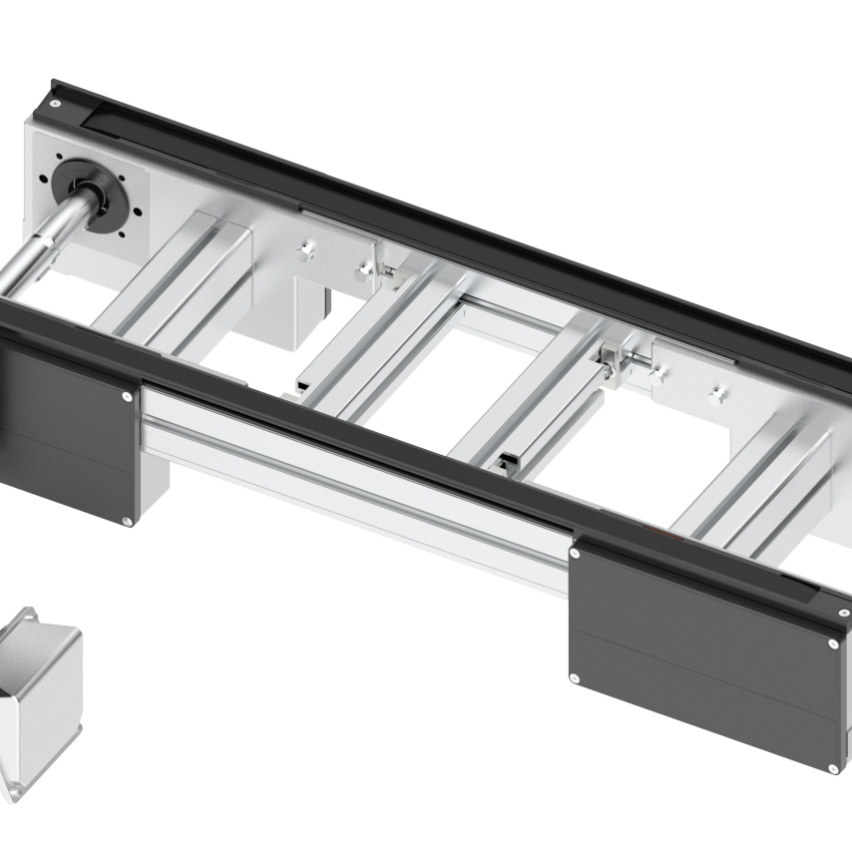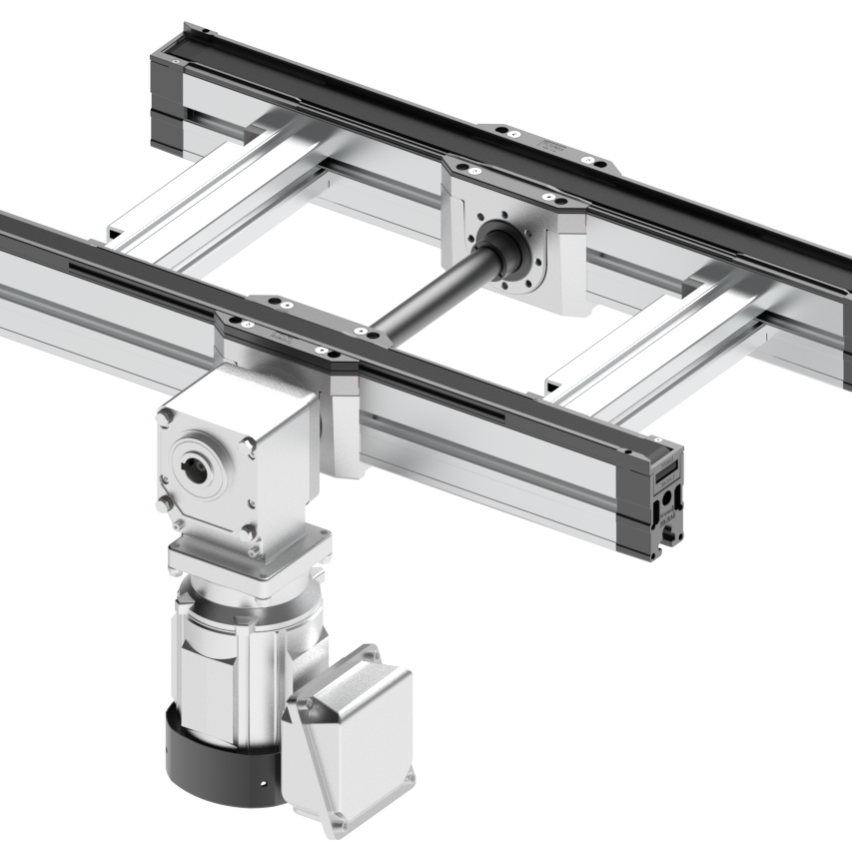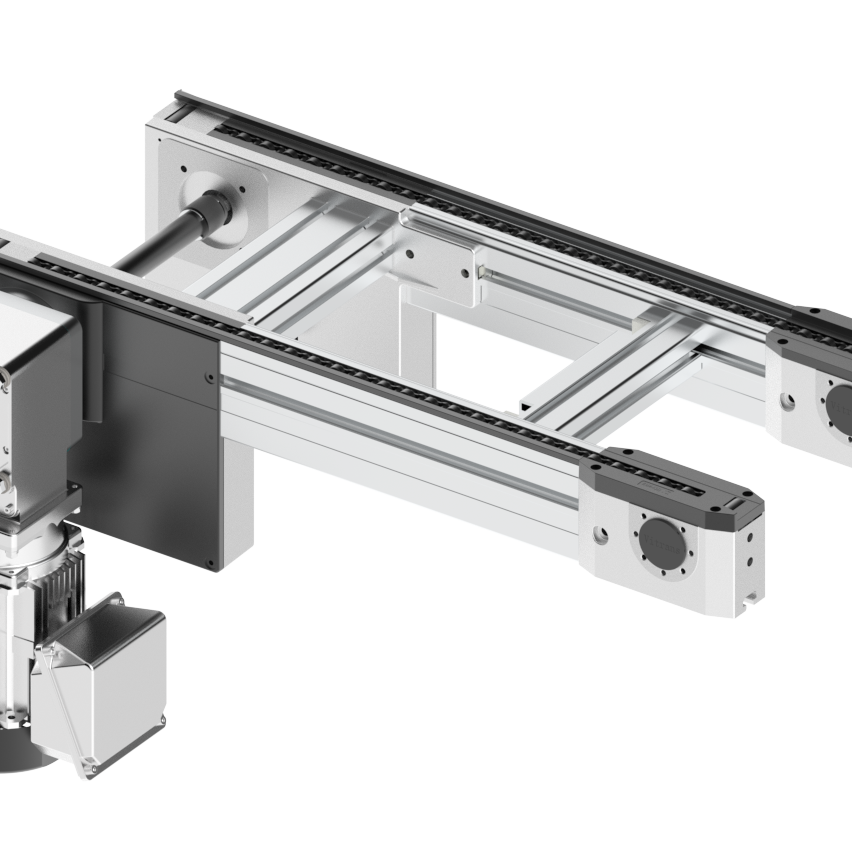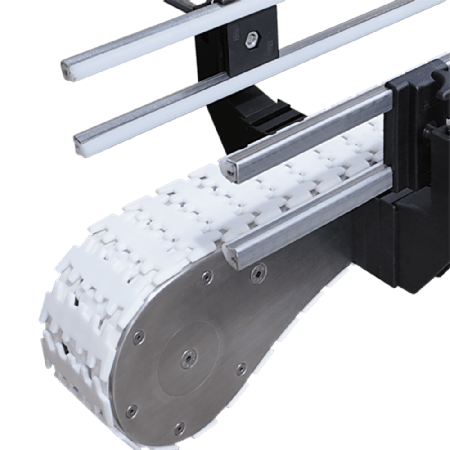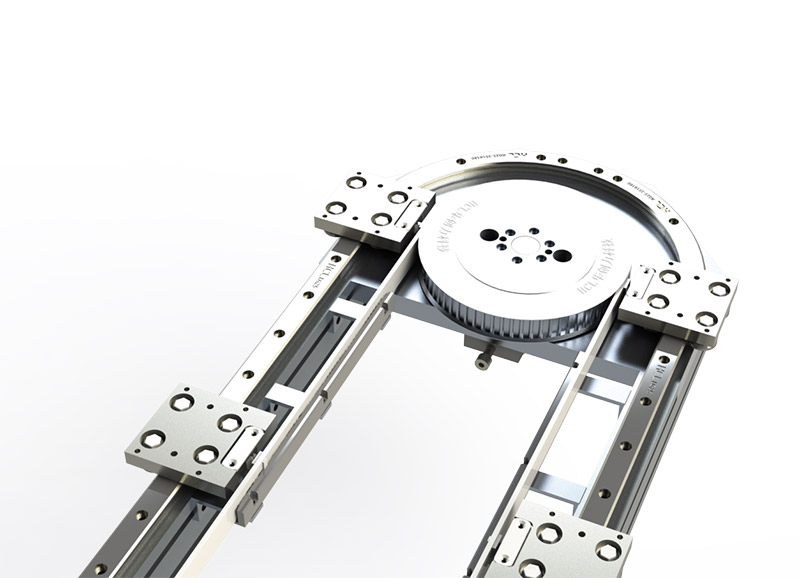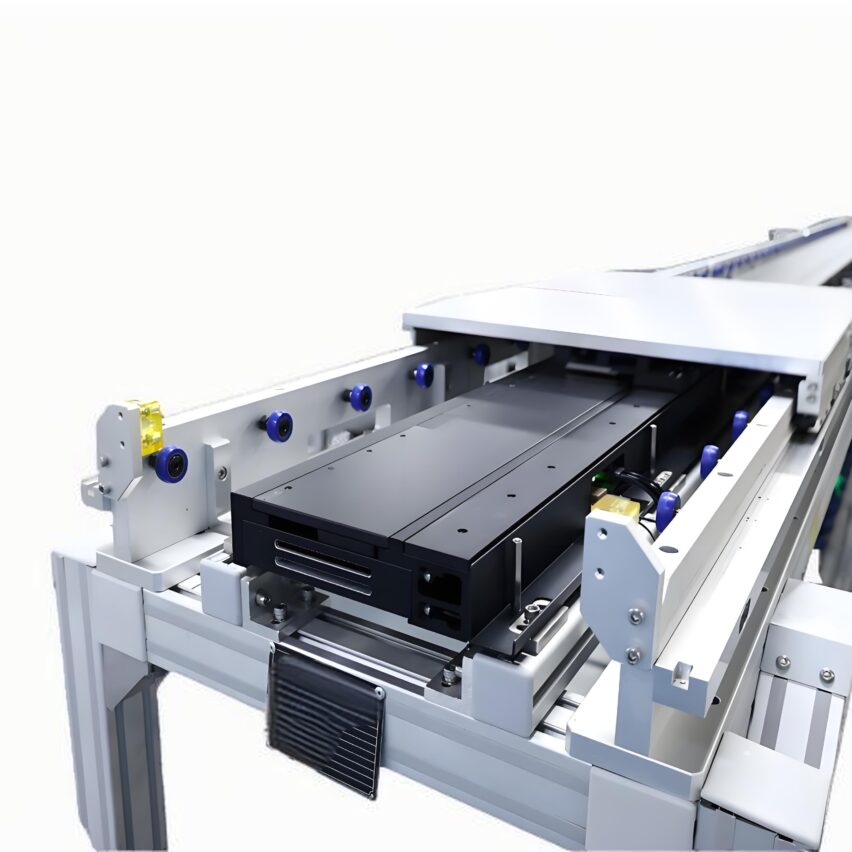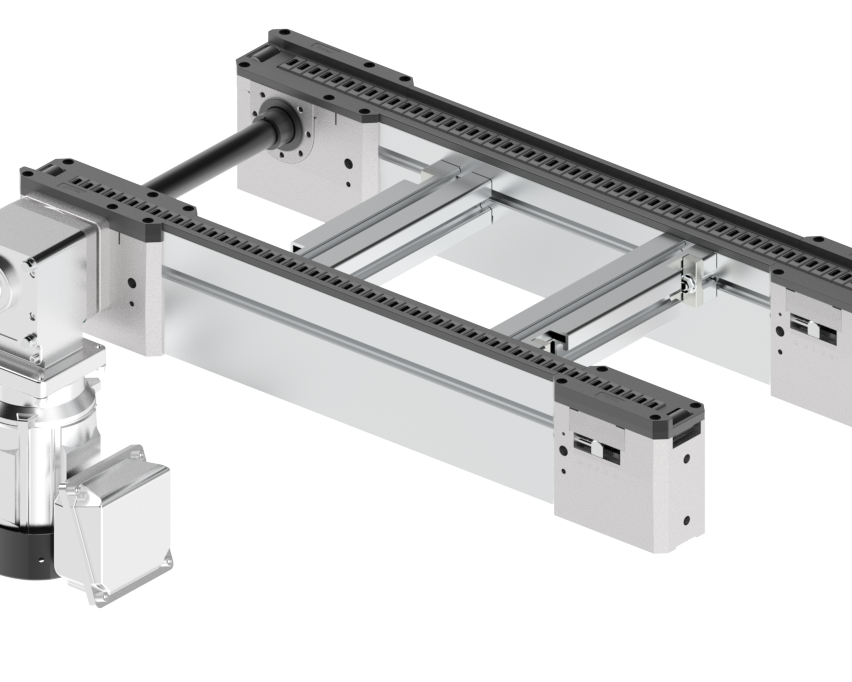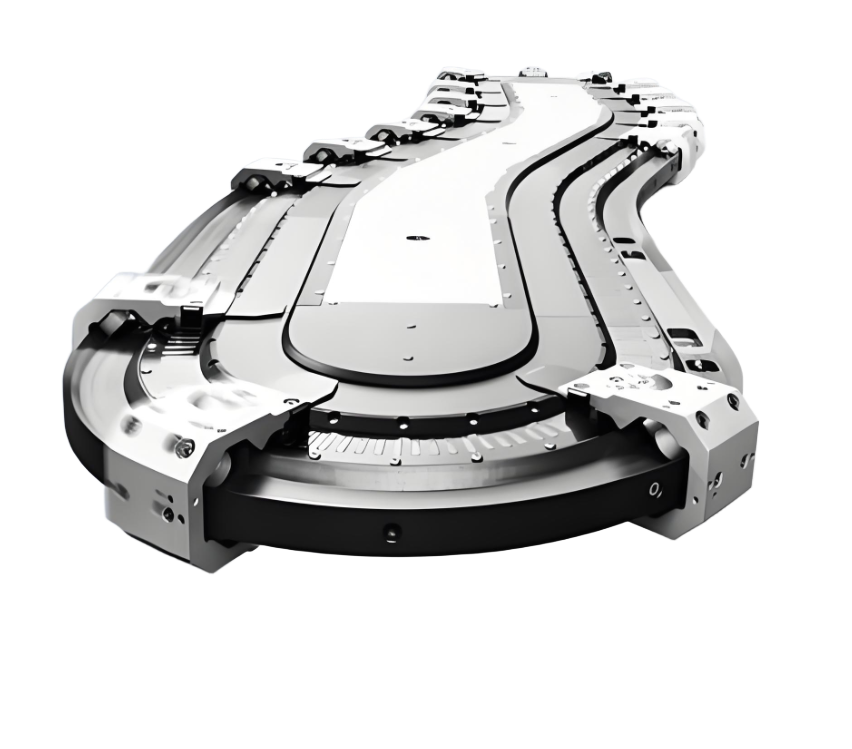



Have you ever seen a conveyor line that flips over? It's that magical device that makes boxes, parts, and even large watermelons turn over on themselves! Don't think it's a sci-fi movie, it's been used in factories for a long time. Today we're going to break it down and talk about how this thing makes things run and turn over at the same time--The key lies in the cooperation between the two brothers, “revolution” and “spin”.!
First, the public rotation: the “big conveyor belt” of the conveyor line”
Imagine a merry-go-round: a horse circling around the center is rotating, and a horse bobbing up and down on its own is considered to be rotating. The same logic applies to a tumbling conveyor line!
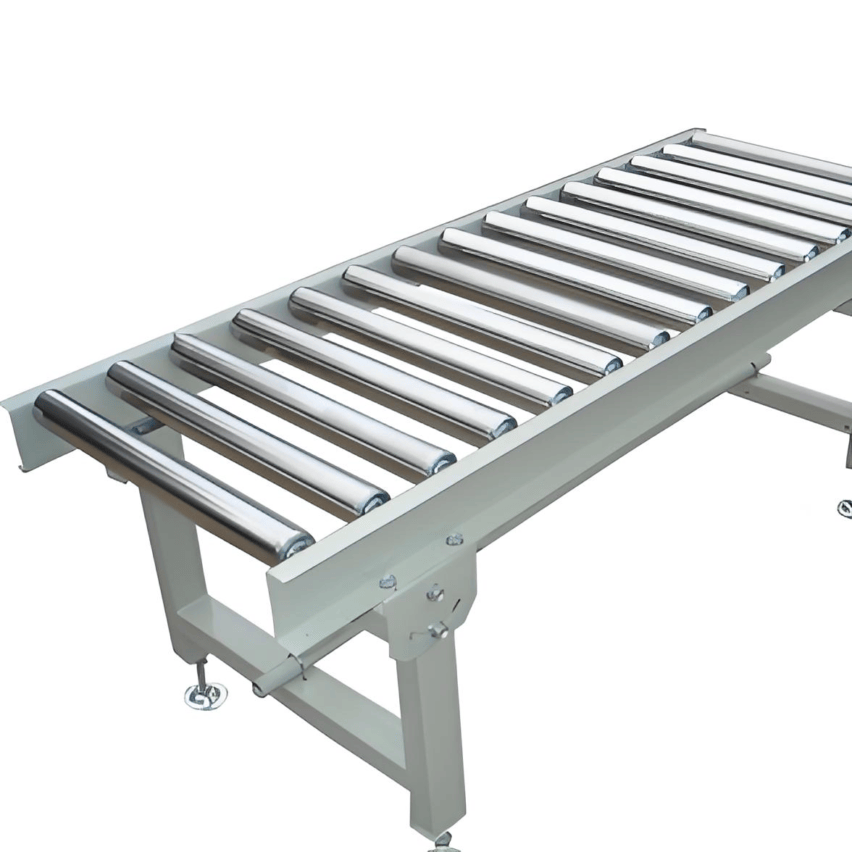
- The public revolution is the basis: The rollers are dragged along by a chain or belt, moving horizontally with the goods. For example, in a fruit and vegetable washing line, the chain drags the rollers in a male rotation, so that the watermelon can run steadily forward.
- Where's the power coming from?Usually a motor + chain drive. The motor is like the heart and the chain is like the blood vessels that deliver power to each roller.
- Why the chain?Simple! The chain bites tight, doesn't slip, carries the build better than a belt, and is especially good for wet washrooms.
White question.: Won't the goods fall off when the rollers rotate?
Rest assured! The roller surface and the cargo are relatively stationary during the revolution, just as if you were sitting in a car moving at a constant speed - as long as you don't brake sharply, the apples won't fly out!
II. Rotation: the “secret switch” for tumbling”
What's the point of just panning? The point is how to get the cargo to turn itself up!Spinning is the soul of the operation.There are two factions of masters here:
1.Rack and Pinion: Lending a Hand
Most common! Roller with a pinion on one end and a rack buried in the road. Like a bicycle chain jammed into a gear:
- Gear to rack→Resistance generates torque→The rollers are forced to rotate→Cargo is being rolled and turned over.The
- dominance: Simple structure and low cost, fruit and vegetable washing line favorite. For example, ball-shaped fruits can be washed evenly to each “belly”.
2.Clutch Flip Faction: Active “Holds”
Suitable for fragile products! The top and bottom conveyor belts look like big hands:
- Pneumatic cylinders push the conveyor belt to clamp the goods→The entire flip mechanism rotates 180 degrees→Release to continue transportationThe
- dominance: Gentle on the goods, logistics sorting precision parts commonly used to avoid manual handling of slippery hands.
Knockout!Rather than the rollers generating their own power, the rotationTriggered by external resistance(rack and pinion) orForced flip of robotic arm(cylinder)!
III. Rotation + Rotation: Doubles Match Show
How do these brothers collaborate? Give me a chestnut for washing apples 🌰.
- orbital revolution initiated (e.g. solar system): The apple lies on the rollers and the chain drags the rollers forward (in revolution).
- rotation trigger: The pinion on the tumbler meets the overhead rack, and with a click the tumbler begins to rotate, turning the apple upside down.
- reposition oneself to a position of readiness: The gear leaves the rack, the roller stops spinning, and the apple continues to pan waiting for the next turn.
Compare and contrast the two technologies::
| Type of technology | Applicable Scenarios | dominance | limitations |
|---|---|---|---|
| rack and pinion | Spherical/cylindrical objects | Simple structure and low maintenance costs | Flip angle fixed |
| Clamping Flip Type | Fragile/irregular objects | Tilt stabilization for cargo protection | Complex organization and high energy consumption |
IV. Real-world applications: how capable is this technology?
- Food factory washing: The greens go over the tumbling line, the sediment is washed away by the current, and each leaf is washed through.
- Automobile factory painting: The body turns over before going into the paint tank and the chassis gets painted evenly.
- logistics warehouse: Express parcel flip-side scanning code, six sides of a second to identify.
personal spiteDon't look at the principle as simple, but there are a lot of design tricks! For example, the rack position is not calculated correctly? Gear may be jammed; too much clamping force? Crispy mooncakes become pies ......The essence is in the words “precise control”.!
V. The future? Making tumbling “smarter”!
The pain points now: rack and pinion wears out fast, and clamping consumes a lot of energy. The next generation is on its way:
- magnetically driven: Controls roller rotation with a magnetic field, eliminating physical contact and doubling life.
- AI visual judgment: The camera recognizes the shape of the goods and automatically switches between flip modes - rack and pinion for boxes and clamping for glass bottles.
Let's be honest.No matter how much the technology changes, there is only one core objective--With the lowest cost, the goods can be turned steadily and accurately, saving labor for more valuable work!After all, it is the truth of industrial progress that machines do the dirty work of “rummaging” for people!