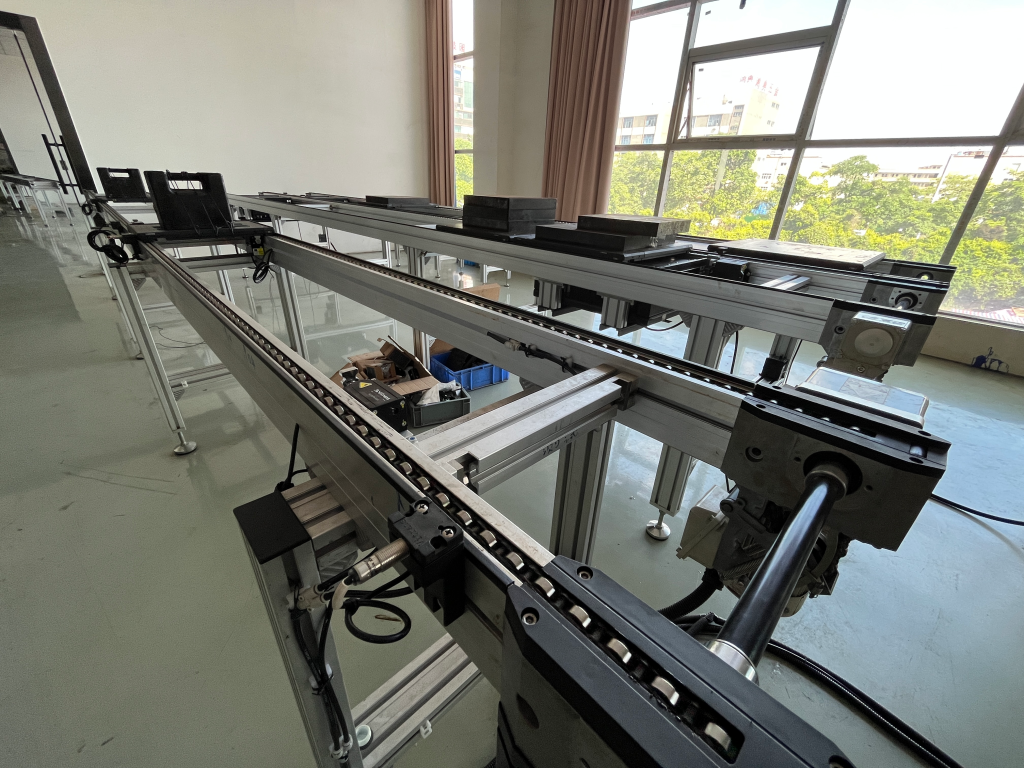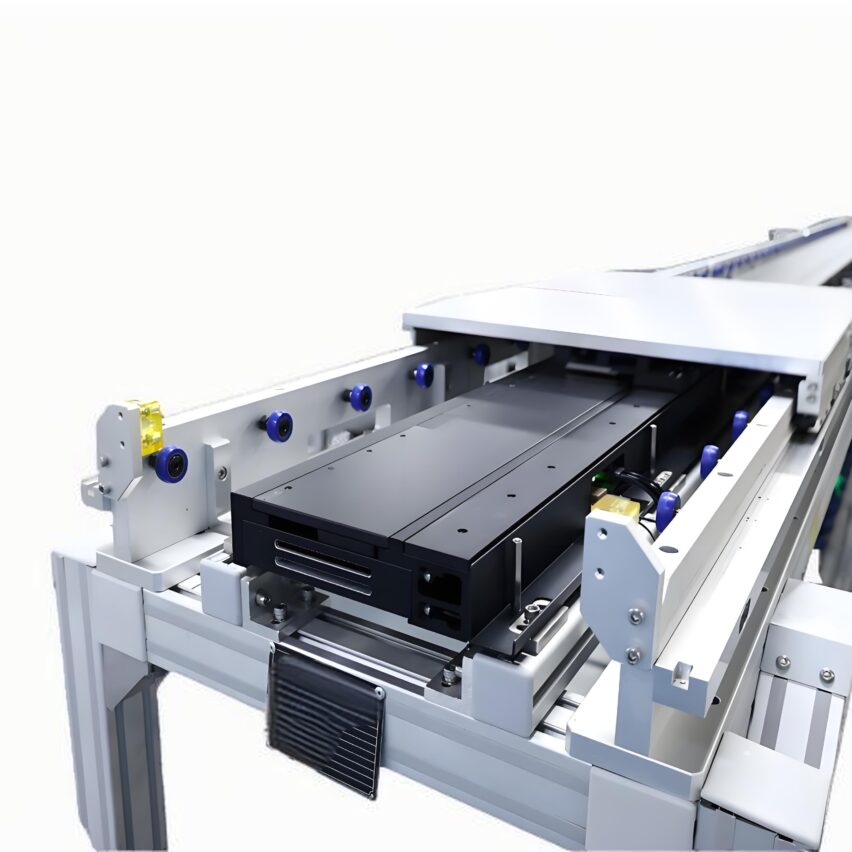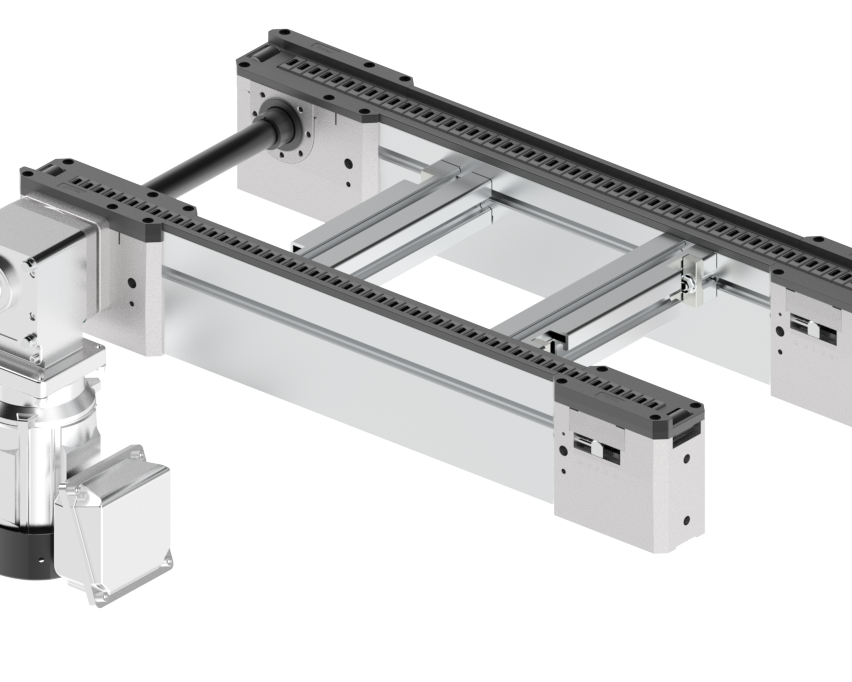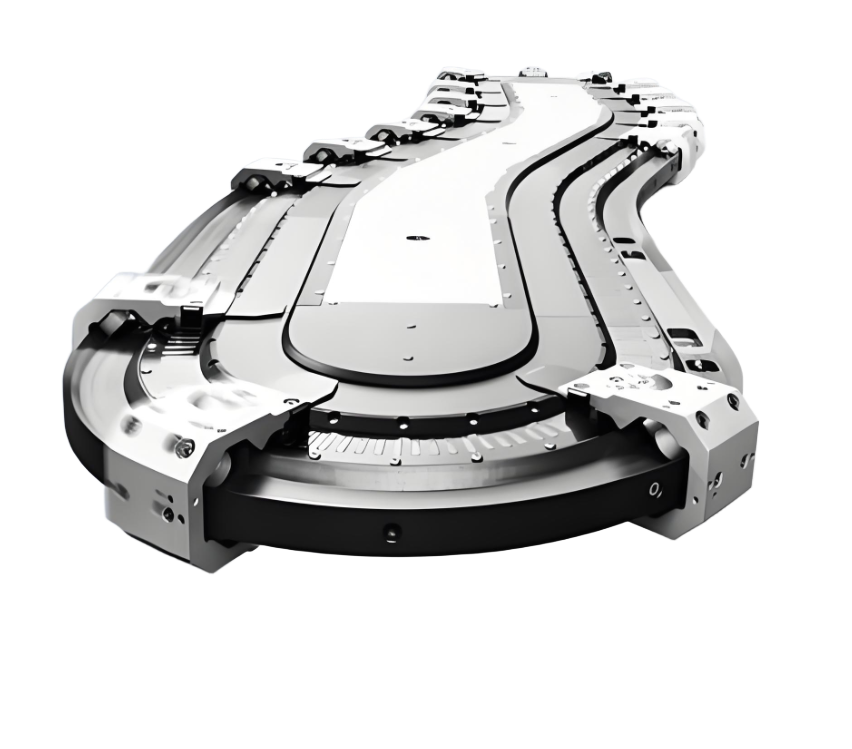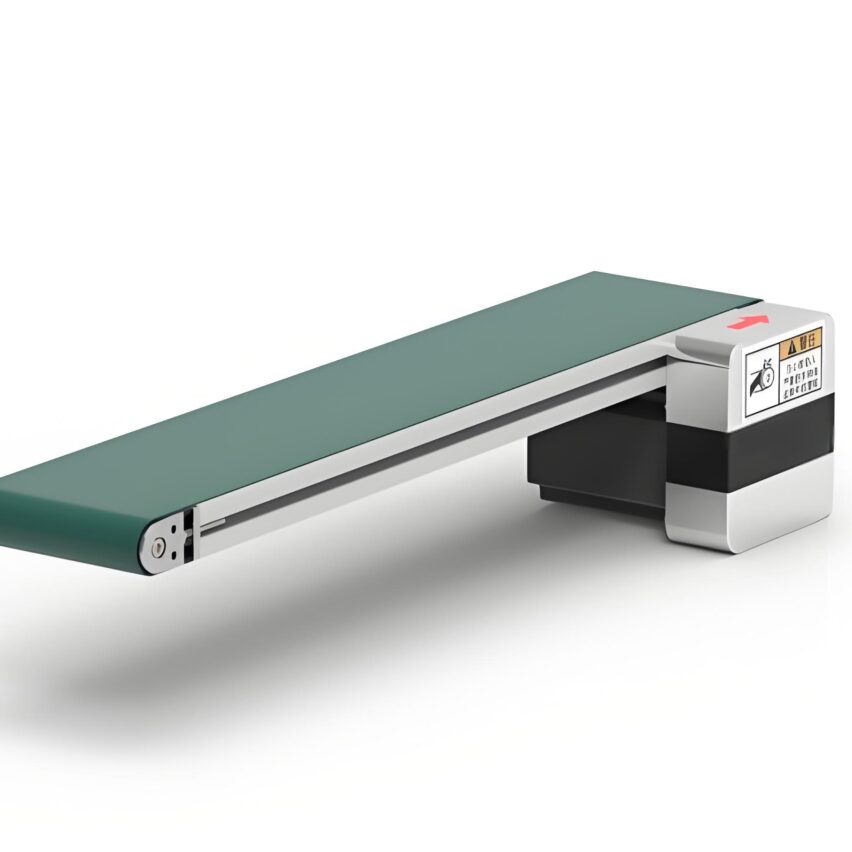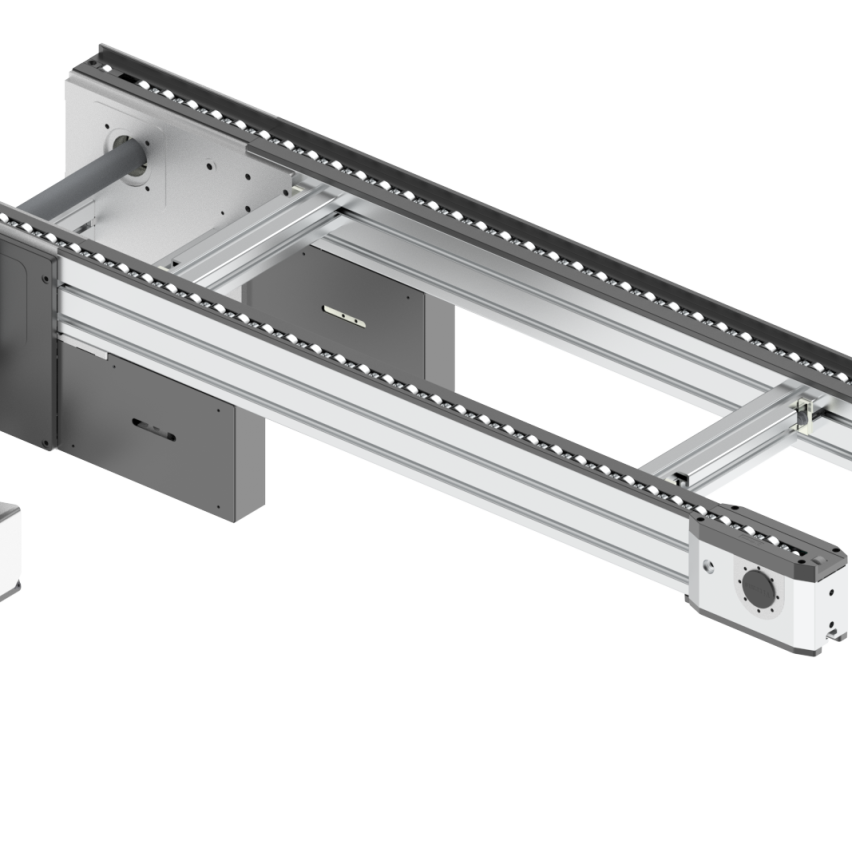




In modern logistics warehousing and production lines, roller conveyor line has become the preferred solution for material conveying by virtue of its flexibility, high efficiency and low cost. Whether it is courier sorting, factory assembly, or warehousing logistics, it can greatly improve the operational efficiency with the advantages of modular design + stable operation, so it has been one of the most commonly used equipment on the automated production line. So for the roller line, how much do you know?
I. Types of roller conveyor lines
roller conveyorIt can be categorized according to different characteristics, and if it is categorized according to the driving method, it can be divided into the following 3 types:
1. Unpowered roller lines
- Working principle: rely on gravity or manpower to promote the goods along the surface of the roller sliding
- Characteristics: simple structure, no energy supply, easy installation, low cost
- Applicable scenes: suitable for light load, short distance transportation, such as packaging workshop, loading and unloading area, etc.
2. Power drum lines
- Working principle: driven by the motor drum rotation, through the friction to drive the goods to move, support frequency conversion speed control
- Characteristics: stable and controllable conveying speed, strong load capacity, can realize automatic continuous conveying
- Scenario: suitable for automated assembly lines, such as courier sorting centers, automotive parts assembly lines, etc.

3. Stacking roller lines
- Working principle: add blocker and accumulation function on the basis of power roller line, which can store goods temporarily and realize beat control.
- Features: Buffer function to support stacked storage of goods
- Scenario: for production lines that need to balance the production beat, such as electronic assembly lines, food packaging lines

Second, the core advantages of roller conveyor line
1. Efficient and flexible delivery capacity
- Wide range of speed adjustment: the conveying speed can be adjusted steplessly within the range of 0.5~30 meters/minute, accurately matching different production rhythms.
- Modular design and layout freedom: the standardized modules support a variety of layout methods such as straight line, turning, climbing (maximum slope ≤15°), etc.
2. Low-cost maintenance and operations
- Simple and reliable structure: the roller line has a simple structure, fewer failure points and less routine maintenance.
- Convenient replacement of spare parts: Individual drums can be replaced individually, the maintenance process does not require large tools, and the maintenance time is short.
3. Broad compatibility
- Multiple carrier adaptability: Can convey boxes, trays, turnover baskets and other forms of carriers.
- Wide load range: single roller load range is 5~200kg, which meets the diversified conveying needs from light parts to heavy equipment.

4. Outstanding energy-saving and environmental performance
- Unpowered type with zero energy consumption: completely dependent on gravity or human power, no energy consumption.
- Powerful low power consumption design: the motor power is usually between 0.2~2.2kW, with high efficiency transmission system, low energy consumption.
III. Typical Application Scenarios
1. Express logistics sorting centers
- E-commerce warehouses: for parcel sorting, packet conveying, efficiently handling large quantities of orders
- Courier outlets: loading and unloading roller platforms for rapid loading and unloading of goods and temporary storage
2. Manufacturing lines
- Automobile manufacturing plant: parts are transported to the assembly station and accurately aligned to the production line beat.
- Home appliance manufacturing: finished product packaging assembly line, stable delivery of home appliance products, reduce labor intervention
3. Warehouse handling systems
- Three-dimensional warehouse: connecting shelves and workstations to realize automated goods in and out of the warehouse
- Cold chain logistics: Stainless steel roller line to transport frozen products, resistant to low temperature and humid environment
4. Customized applications for specific industries
- Food processing: food-grade 304 stainless steel roller, in line with food hygiene and safety standards
- Electronic workshop: anti-static roller conveyor PCB board, effectively prevent static damage
Four,platenConveyor Line Selectionguidebook
1. Clarifying load requirements
- Evaluation of the weight of a single piece: Selection of the appropriate size roller according to the weight of the single piece of conveyed goods.
- Planning of the total conveying volume: Combining the production beat with the conveying efficiency, determine theplaten lineThe total load capacity and conveyor speed of the

2. Defining the conveyance environment
– environmental factorConsideration: Analyze the humidity, temperature, cleanliness and other environmental conditions at the conveying site, and select roller materials with special properties such as corrosion resistance, high temperature resistance or dust resistance.
3. Selection of drive type
- Unpowered solutions: for light loads, short distances and cost-sensitive scenarios.
- Power drive: Suitable for automated conveying scenarios with medium to long distances, large loads and the requirement for stable speeds.
- Accumulation type selection: for production lines that require buffer and temporary storage functions.
4. Planning layout details
- Route planning: Determine whether the drum line requires functional modules such as straight lines, turns, and climbs.
- Supporting equipment integration: Consider the docking requirements with other automation equipment to ensure the feasibility of system integration.
roller conveyorAs the “invisible backbone” of the automated production line, it is continuously empowering industrial upgrading with the advantages of flexibility, durability and low cost. It not only plays an important role in the traditional workshop, but also becomes more and more intelligent and efficient with the application of automation upgrading and intelligent technology. In the future, the roller conveyor line will develop in the direction of higher precision, higher speed and stronger intelligence, providing better logistics and conveying solutions for various industries. If you are looking for suitable conveying equipment for your production line or logistics system, roller conveyor line is undoubtedly a choice worth considering.